Gun fights, sucker punches, duels and last stands… I’ve heard some bad advice on writing combat scenes, some of it gut-wrenchingly horrible. For whatever reason this writing topic seems to be littered with testosterone-infused mansplanations that leave writers confused and left with scenes that instead of pumping readers with adrenaline, just face plant on the canvass. So what gives? In this post I offer some tips on how to keep your readers fully engaged.
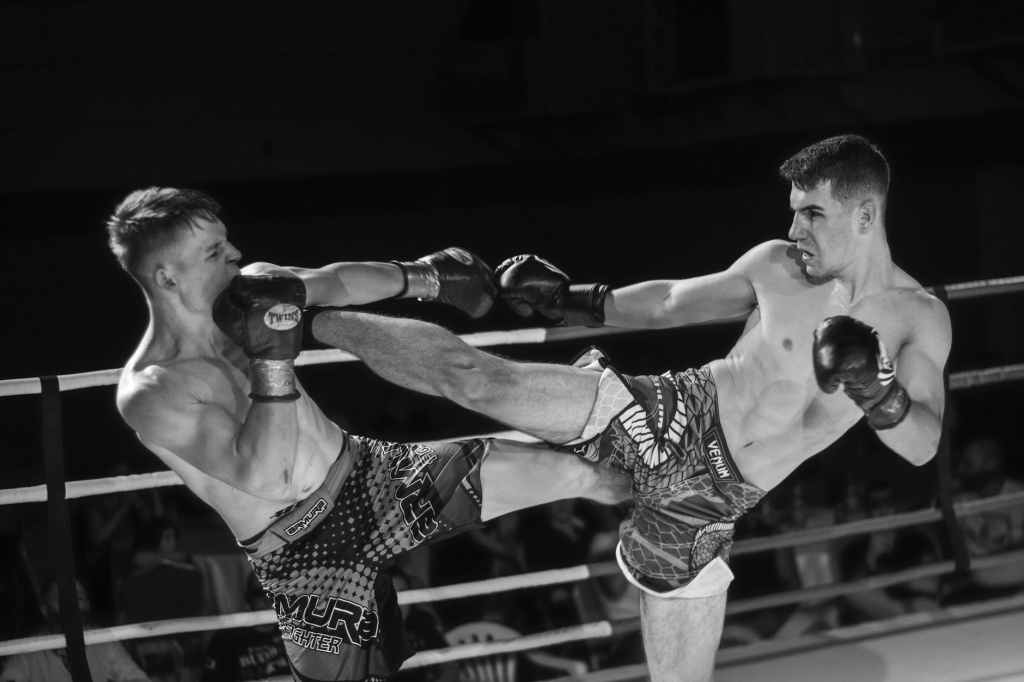
Realism vs Dramatic Exposition
I’m sure you’ve heard this first issue: writers not writing fight scenes realistically. Armchair critics love to sit back and point out mistakes:
– you’ll break your hand if you bareknuckle punch a guy in the head,
– you can’t wake up from head trauma as if you’ve just had a nap,
– you won’t be that accurate with a handgun,
and ultimately… “it’s not like that in real life.”
Of course not. It’s fiction.
But spaceships can’t travel faster that light, amateur sleuths don’t solve that many murders, and most cowboy billionaire werewolves don’t also have six pack abs.
Writers have multiple objectives with fight scenes. The first and foremost of these is escalation of dramatic tension. The story also has to advance. The reader needs to understand what is happening and the stakes involved.
Fiction is not a how-to manual.
That’s not to say avoid the research. DO thorough research. Dive deeply into the research and understand as much as you can about the details of your combat scene. The reason you do the detailed research is so that while you’re telling the story, you’re not tripping over facts and inconsistencies that when messed up will knock your readers out of the immersive experience of your story. You want to understand what the details are so that when you break from realism, you’re aware of it, and that allows you to sell it.
Know Your Audience
It’s critical to understand the details readers are expecting. A physical confrontation in an action thriller like Mark Greaney’s Gray Man series needs to be accurate, particularly with details of weapon operations. Greaney’s readers will know that difference between a Glock 19 and a Sig P320 and many read specifically for the details of the fictional shooting experience. The bodyguard/cop/Navy SEAL romance crowd are skipping ahead to the abs.
Know your genre. Know what details your audience is expecting, and play to them.
I recently read a cyberpunk book with a glaring “tactical” flaw. The main character was a cyborg military operative whose defining feature was glowing blue eyes. At the beginning of the story, the cyborgs attack at night and the author describes a vivid image of glowing blue eyes advancing out of the darkness.
Anyone with military experience would laugh at that. What they read is a massive tactical mistake… the cyborgs revealing their precise positions to the enemy and thereby negating the whole point of a night attack.
But here’s the thing… the series is selling. It works not because it’s tactically astute, but because it creates imagery consistent with the cyberpunk motif that the readers are looking for.
Establish the Stakes
When using physical conflict to add suspense to a novel, it’s important to establish the stakes of the conflict as early as possible.
Ideally, make them something other than just “survival.” There’s nothing inherently wrong with a character wanting to survive the next page. That can work in a first chapter. But if you’re half way through the book, the action can be a detour from the core question the protagonist is struggling with.
Dramatic tension occurs when something the reader really cares about hangs in the balance of the conflict… the solution to a mystery, the fate of another critical character, the loss of a relationship, etc.
Hand in hand with the stakes is the uncertainty of the outcome.
The outcome of the conflict can’t be a foregone conclusion. If it is, readers will skip it or get bored and put the book down.
Make sure your bad guys have a chance to win. Throw in multiple goons, better weapons, a traitor in the party, sneak attacks, kryptonite, etc. Don’t play fair with your protagonist.
The stakes directly impact the uncertainty of the outcome. A sumo wrestler will likely be able to push drunken patron out of a bar. But what if pushing that patron out is tied to the only means he has of finding his kidnapped son? What if he slips? A mundane task can be incredibly suspenseful if there is enough riding on it.
Set Up a Strategy, Then Knock it Down
Strategy is the plan that you employ to get you where you want to go. Tactics are the individual steps necessary to get you there.
When building up to a physical conflict, it can help to establish a strategy for a character. When a character develops a plan that character has agency in the story. And it gives the reader a chance to engage more deeply–would they do the same thing? Further, a solid plan can help relax the reader into a sense of security, that the important outcome will come up in our favour. And then at any point where the plan fails, that security is lost and dramatic tension escalates. The character has to adapt on the fly. In this way a physical conflict becomes about the character out-thinking the problems presented to them. The physical action serves as punctuation.
There’s a great example of this in the movie Aliens. Ripley and the Colonial Marines are stuck on planet LV-426 after an alien gets on board their drop ship and it crashes. The marines barricade themselves in a colonist atmospheric processing station. They seal access doors, set up robotic sentries and send Bishop, their synthetic human, to a colony transmitter where he can remotely pilot the remaining drop ship down for their rescue. As the aliens attack, each of the points is challenged, and suspense builds.
Another great example of this in Saving Private Ryan. At the end of the movie, Captain Miller (Tom Hanks) and his crew have found Private Ryan, but they have to hold a bridge against a Nazi advance. They plan out their defensive operation… funnel the armor into a narrow street, use a sticky bomb to disable a tank, require their clerk-translator Upham to deliver ammunition as needed, etc. The plan works well for the most part, but every challenge point drips with dramatic suspense. Spielberg With connects each plan point to individual character arcs, the immediate question of whether or not Ryan (Matt Damon) will survive, and with each delivers a ball peen hammer strike on the theme of risking the lives of the many for the few.
Final Thoughts
When you can’t write what you know, research. (Women can effectively wield swords, they aren’t that heavy, and even if they were, women can lift heavy things too.) And seek out beta readers who know more than you. Critical feedback from an external reader is incredibly valuable because they see what you’ve written, not what you initially envisioned.
Ultimately like anything else in your writing, think critically about the action scenes, put as much work into them as your other scenes, and readers will keep turning your pages.
 Charles James SF Author